

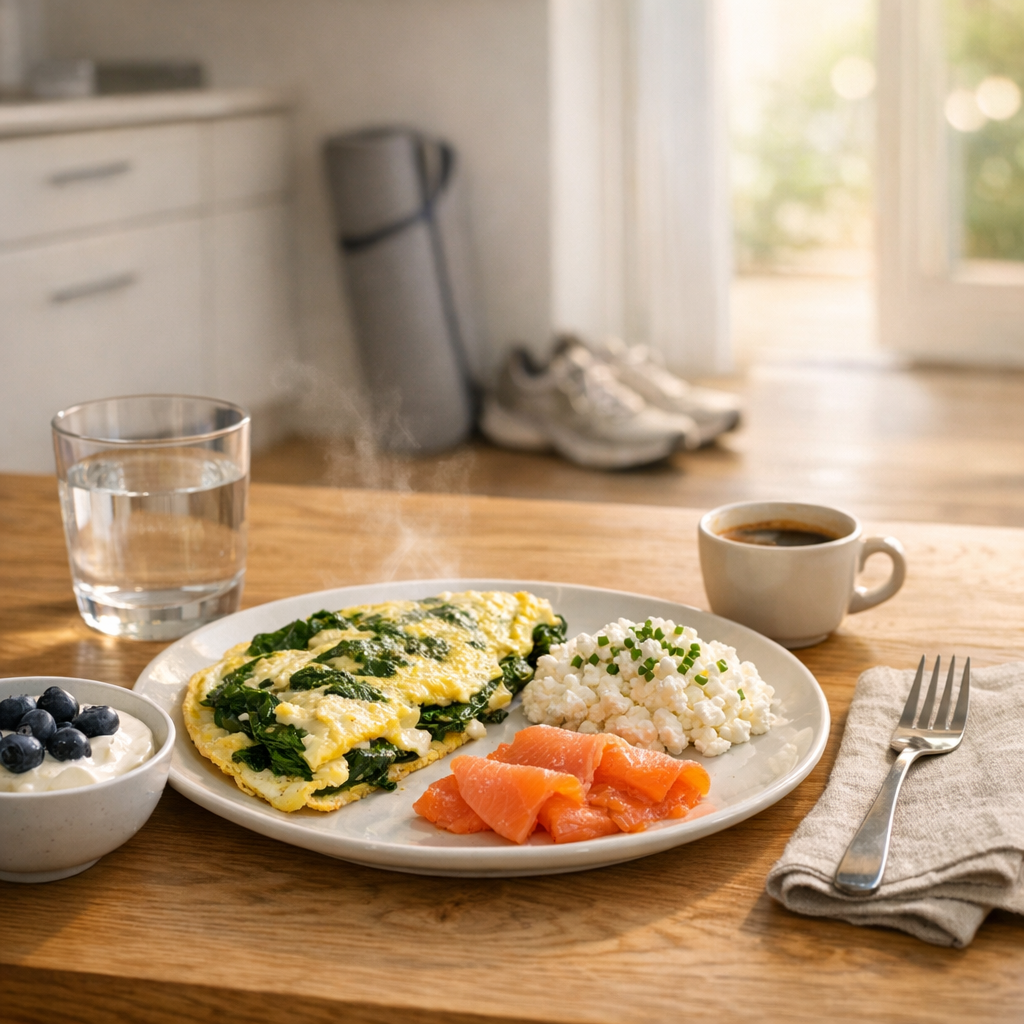
The 30-30-30 breakfast rule is popular, but what does it actually involve and how do you apply it in a no-nonsense way in your morning routine? Below you'll find a clear explanation, practical breakfast examples to reach 30 grams of protein and ideas for 30 minutes of movement, plus FAQs so you can get started right away. For a simple starting point for morning routines: Biohacking for beginners: overview.
What exactly does the 30-30-30 rule involve?
The 30-30-30 rule revolves around three simple morning steps: within 30 minutes of waking you eat about 30 grams of protein, followed by 30 minutes of light to moderate activity. The method gained popularity on social media and is often linked to Gary Brecka, with earlier references to ideas in Tim Ferriss’ work. It is not an official protocol or medical advice, but a practical hook to structure your morning. For broader context: What is biohacking? Background and definitions.
In practice it means composing a protein-rich breakfast and then moving at a pace where you can still hold a conversation. That could be a brisk walk, easy-pace cycling, relaxed swimming, or a flowing yoga session. The order can vary: some people prefer to eat first and then move, others schedule the movement first and eat afterwards. Choose what feels doable and pleasant for you.
Important to know: there is no specific scientific research showing that exactly this combination and timing is superior. The individual components—eating sufficient protein and moving regularly—fit within widely accepted lifestyle principles. Use the 30-30-30 rule mainly as a structure you can adapt to your schedule, preferences, and dietary choices. See it as a starting point, not a strict law. For reference, the term is also written as the 30 30 30 breakfast rule. On morning routines and timing: 10-3-2-1-0 sleep hack: explained.
High-protein breakfast – how to reach 30 grams
Quark bowl: 300 g low-fat quark with 30 g nuts or seeds totals roughly 30 g protein. Add cinnamon or fruit for flavor, like berries and nuts.
Yogurt combo: 250 g Skyr or 0–2% Greek yogurt with 40 g muesli or granola gets you near 30 g protein, depending on the brand.
Bread and toppings: 2–3 slices of whole-grain bread with 100 g chicken breast or 120 g cottage cheese provides about 28–32 g protein.
Eggs: 3 eggs with 2 whole-grain wraps or 150 g beans yields around 25–30 g protein. Add vegetables for extra fullness.
Plant-based: tofu scramble from 200–220 g tofu with vegetables and 1 slice of whole-grain bread hits around 30 g protein.
Oats combo: 60 g oats prepared with 250 ml semi-skimmed milk plus 150 g quark on the side comes close to 30 g protein.
Tip: choose whole-grain and fiber-rich options where possible and stick close to whole foods; read more in Gut health: explanation and basics.
Movement – 30 minutes at moderate intensity
Aim for an effort where you can still talk but not sing. As a rule of thumb, think of an exertion level of 4–6 on a 1–10 scale. Examples include brisk walking, easy cycling, swimming laps, low-resistance rowing, or a dynamic yoga flow. More background on intensity and breathing: VO2 max: what is it?.
If you’re short on time, split your 30 minutes into two 15-minute blocks, for example a short morning walk and a second round later in the day. You can also vary by day to keep it enjoyable and sustainable, as long as the movement stays light to moderate and matches your level.
Possible pitfalls and when to skip
Not everyone tolerates 30 grams of protein right after waking. If you get stomach discomfort or lack appetite, push breakfast a bit later and still choose a high-protein option. Don’t force extra calories if you’re not hungry. For some, 30 grams at once is a lot; you can split the protein into two small morning eating moments.
The 30-minute timing is a tool, not a requirement. If you work irregular hours or prefer to exercise later, adapt the rule. If you have a medical condition or take medication with specific timing, align your morning routine with a healthcare professional.
Frequently asked questions
What is the 30/30/30 method?
It’s a practical morning routine: within 30 minutes of waking, eat about 30 grams of protein and move for 30 minutes at a light to moderate intensity. You can tailor the order and exact timing to your own schedule.
How can I lose weight with the 30-30-30 method?
Weight loss mainly relates to your overall energy intake and expenditure. The 30-30-30 rule can provide structure to your morning, but it’s not a guarantee on its own. Keep an eye on your whole day and choose an approach you can stick with.
Which breakfast fits the 30-30-30 rule?
Think quark or yogurt with grains, eggs with whole-grain wraps, cottage cheese on bread, or a tofu scramble. Aim for roughly 30 grams of protein per breakfast, with portions that suit you.
Does breakfast have to be within exactly 30 minutes?
No. Treat the 30 minutes as a guideline. If slightly later fits better or feels more comfortable, that’s fine. Long-term consistency matters more than perfect timing.
Does exercising fasted also work?
That’s person-dependent. Some people like moving fasted, others prefer a small meal first. Choose what feels comfortable and feasible. If you feel lightheaded, eat something small first.
Want to read more about our products and ingredients? Explore our range on vibefuel.com.
Share:
Using lion’s mane: forms, dosage and label tips
Naturally improve your concentration: practical guide