

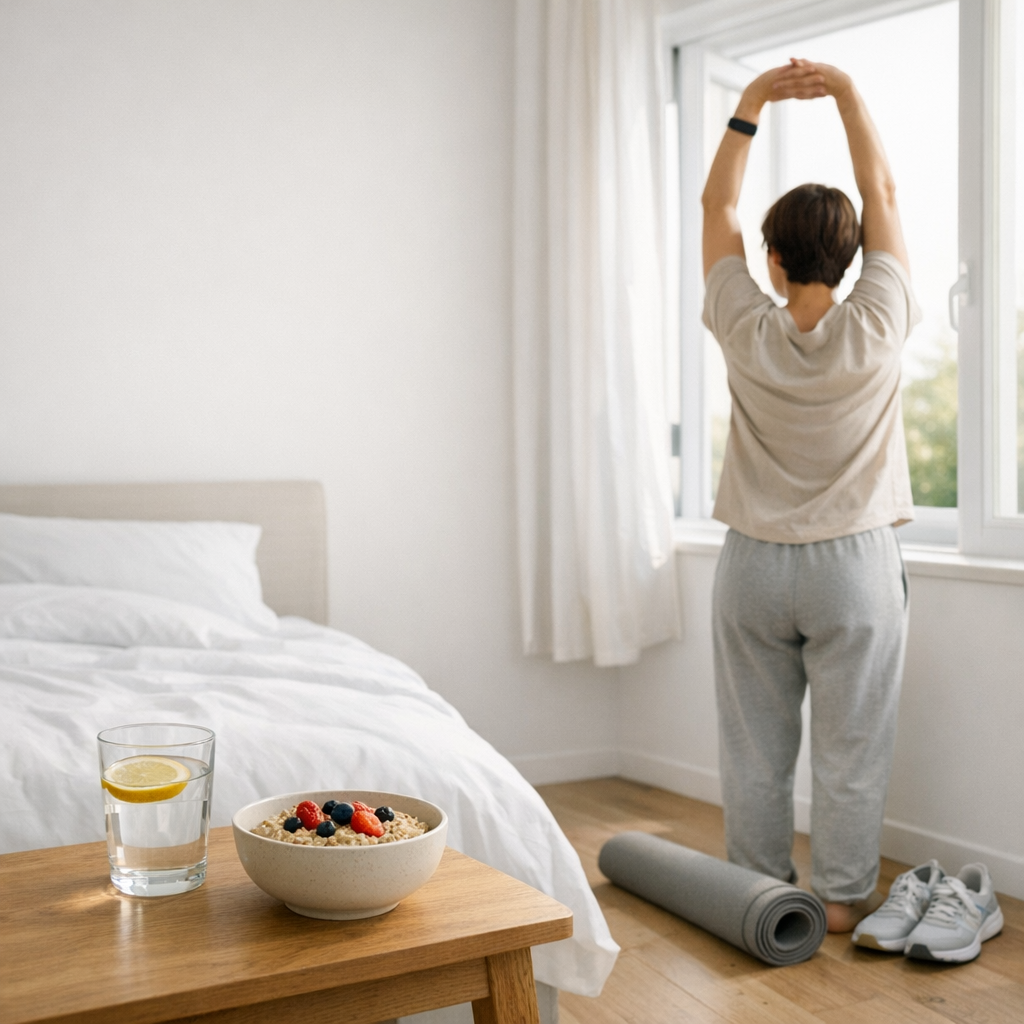
Looking for the best biohack for beginners and want to start without hassle? Begin with the basics. With a few simple biohacks you can get structured today. This guide shows you, in a practical and no‑nonsense way, how to start with sleep and light, complemented by movement, nutrition, breathing, cold–heat, and simple tracking. No hype—just clear steps and habits you can plan and measure yourself.
What is biohacking?
Biohacking is the systematic adjustment of your lifestyle through small experiments you can measure yourself. Think day rhythm, eating window, breathing, movement, or using wearables. You pick one change, set a period, choose a simple measurement method, and evaluate. Biohacking for beginners is about accessible routines that respect your own rhythm and make your progress visible. Want to cover the basics first? Read: What is biohacking? (explained).
Sleep as the foundation: the best place to start
Many biohacking methods consider sleep the foundation. Your daily energy, focus windows, and recovery planning are closely tied to a stable sleep–wake rhythm. For beginners this is often the best biohack to start with, because you can influence it every day and it’s easy to organize.
How to do it: choose a fixed bedtime and wake time, limit late screen time, and make your bedroom dark and quiet. Combine this with morning light and a short evening routine. Keep a sleep log for 14 days and evaluate bedtime, wake time, and nighttime interruptions. The goal isn’t perfection but consistency. A simple guideline to explore is the 10-3-2-1-0 sleep hack: explanation and application.
Practical sleep checklist
- Set times: roughly the same bed and wake time 7 days a week
- Evening routine: 30–60 minutes of wind‑down and dimmed screens before bed
- Dark and cool: blackout and a tidy bedroom
- Morning light: get outside within 30 minutes after waking
- Logbook: note bedtime, wake time, interruptions, caffeine intake
Natural light and daily rhythm
Natural light gives your body a clear daytime signal. A short walk in the morning and early afternoon helps build a recognizable rhythm. In the evening, reduce bright blue light by dimming lamps and putting screens away in time. Beginner guideline: 5–10 minutes of morning light, another 10–15 minutes of daylight later on, and more dim light at home after sunset.
Movement: short, simple, and consistent
Movement doesn’t have to be complex to be valuable in a biohacking approach. Choose a form you enjoy and that fits your day. For beginners, a mix of light activity and short strength stimuli is often easy to plan: daily walking or cycling, and 2–3 times per week a short full‑body session with basic movements like squat, push, hinge, and pull. Keep your volume modest, track it in a note, and only increase once your rhythm is stable.
Practical start plan: 6,000–8,000 steps per day as a target, 2–3 sessions of 20–30 minutes per week of strength with bodyweight or light weights, plus one playful activity (for example swimming, playing with kids, or a short mobility session). Choose fixed time slots in your week so it stays predictable.
Nutrition and simple fasting
For beginners it’s more useful to create regularity first than to follow complicated protocols right away. Use recognizable meals, enough fluids, and minimal distraction while eating. If you want to experiment with fasting, start simple: 12–12. That means 12 hours eating and 12 hours not eating within 24 hours. Example: breakfast at 8:00 and your last snack before 20:00. If this feels good and fits your day, you can adjust later. Want neutral background on a much‑discussed category? See: Adaptogens: basic explainer.
Guidelines that help: plan your eating moments in advance, choose unprocessed main meals with sufficient protein sources and fiber‑rich components, and drink water or tea between meals. Use a food log or calendar to briefly note your window and meals. If you have a medical condition or use medication, always consult a professional before adjusting your eating window. New to this topic? Start here: What are nootropics? (explainer).
Breathing: rhythm and awareness
Breathing is an underrated, simple biohack. The goal for beginners is rhythm and nasal breathing. Try 1–2 times a day for 3 minutes to inhale calmly through your nose and exhale just a little longer than you inhale. You can do this seated or during a walk. Place a hand on your belly to feel the movement and keep the pace comfortable. Note in your log when you practice and how easy it felt.
Cold and heat: deliberate stimuli
Cold and heat are used in various traditions as deliberate stimuli. For beginners, the entry is: finish with 15–30 seconds of cold at the end of a shower or do a short session in a warm space like a sauna when available. Plan only 2–3 times per week and listen to your limits. Avoid extreme stimuli if you lack experience. When in doubt or with medical issues: consult a professional first.
Wearables and tracking for beginners
Measuring gives you insight into patterns. A simple wearable or app can help with sleep duration, bedtime, steps, and resting heart rate. Choose 1–2 metrics to focus on for 2 to 4 weeks, for example wake time and daily steps. More isn’t always better; you want recognizable trends. Link your measurements to your actions: morning light, fixed bedtime, walk slots, and strength sessions. This way you see which habit correlates with which change in your log.
Example day plan for beginners
Use this as inspiration and adjust the times to your own day.
- Morning: wake at a fixed time, 5–10 minutes of outdoor light, drink some water
- Before noon: 10–15 minutes walking or cycling
- Midday: planned lunch without distractions
- Late afternoon: short strength or mobility session of 20–30 minutes
- Evening: last meal at a set time, dim lights, screens off earlier
- Sleep: fixed bedtime, short routine, cool and dark room
FAQ about biohacking for beginners
What are the simple biohacks?
Start with fixed bed and wake times, morning light, daily walking, recognizable meals with a simple eating window like 12–12, and a short breathing routine. Track these habits for 2–4 weeks in a log and evaluate what is feasible in your week.
What are the best habits for biohacking?
The best habits are the ones you can do consistently. Choose one focus area at a time, for example sleep or movement. Keep it small, schedule it in your calendar, and measure 1–2 simple variables like wake time or steps. Only expand when your rhythm is stable.
Does biohacking really work?
Biohacking is a process of planning, measuring, and evaluating. Outcomes differ per person and context. By running small experiments over a fixed period and keeping your data simple, you discover what’s practically doable in your situation.
Get started: pick 1 biohack and start today
Choose one cornerstone for the next 14 days, for example a fixed wake time plus 5–10 minutes of morning light. Note your progress daily and don’t make it more complex than necessary. Want a sober, neutral next step for beginners? Check this:
Share:
Biohack protocol: practical guide for your routine