

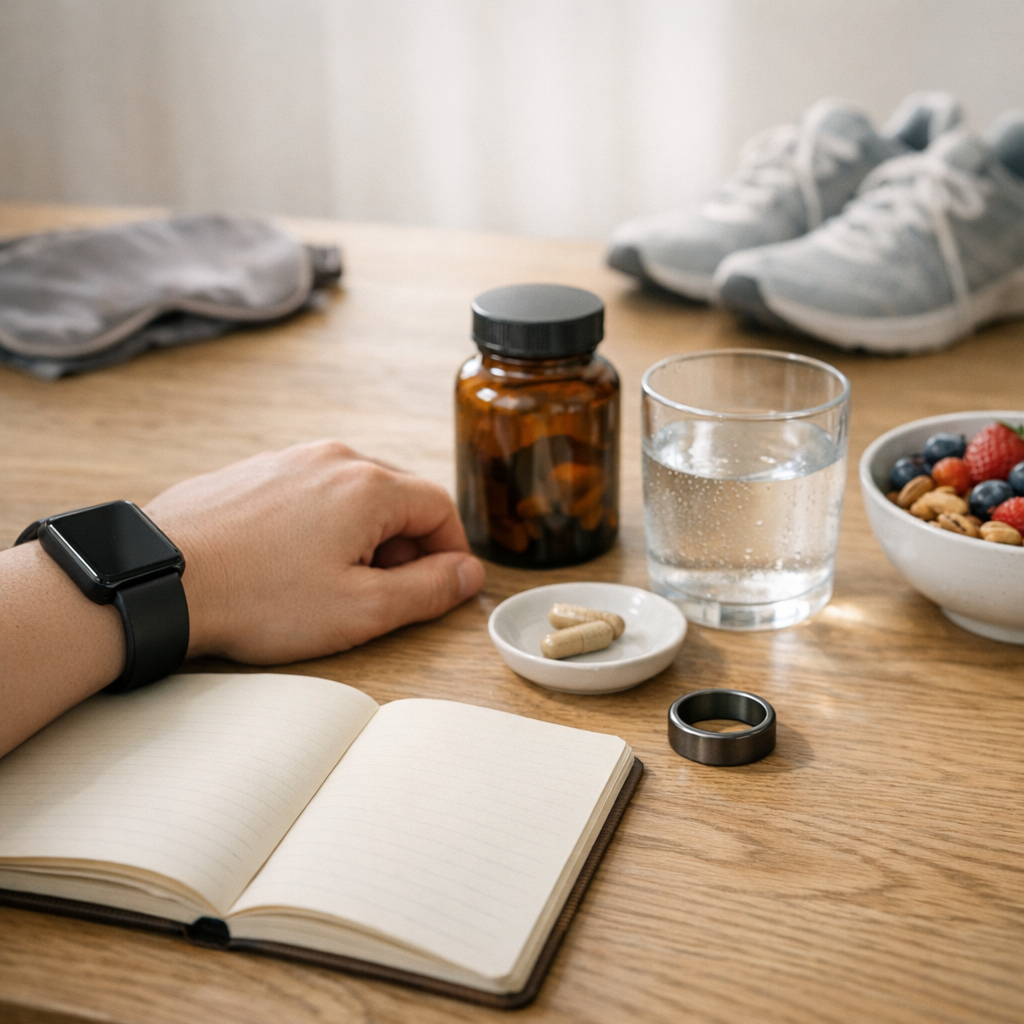
Biohacking is the practice of systematically tracking and experimenting with lifestyle and technology to better understand how your body and behavior respond to stimuli. Think of logging nutrition, sleep, and exercise, supplemented with data from wearables or a journal. The goal is not a promise, but to collect information that helps you underpin deliberate choices.
Definition and approach
At its core, biohacking combines self-observation with small, controlled experiments. Common steps are: establish a baseline, change 1 variable at a time, document changes for an agreed period, and then evaluate. This can be as simple as a notebook or spreadsheet, but also a smartwatch or ring that estimates things like activity and sleep. The emphasis is on recognizing patterns in your context. Numbers from devices are estimates and only gain meaning when you link them to what you do, how you structure your day, and the environment you choose. Just getting started? Read the best biohack for beginners.
Nutrition: observing and measuring
In nutrition-focused biohacking, the emphasis is on insight. Many people track what and when they eat, how meals are composed, and which situations precede certain choices. A food diary or app makes it easier to record portions, ingredients, and timing. It can help to note fixed observations, such as energy levels throughout the day, satiety, or need for concentration after a meal, without drawing immediate conclusions. Some biohackers outline fixed experiments—for example, a week with different meal timing or variation in macronutrients—and compare those with the baseline. Keep changes manageable, make the measurement period long enough to see a pattern, and also record context such as sleep and activity so you can weigh confounders. For background on commonly discussed topics, read What are adaptogens?.
Exercise and recovery: data and methods
Hack your training by systematically describing training stimuli and recovery. Think of training type, duration, intensity, perceived load, and recovery time. Wearables and heart rate straps can provide objective data, such as resting heart rate or estimates of heart rate variability, while a simple journal captures the subjective experience. By varying intensity and volume step by step, you can see which combinations are practical and sustainable in your schedule. Evaluate at fixed moments, record rest days deliberately, and avoid changing multiple variables at the same time. This helps attribute effects to the single change you made.
Sleep: patterns and parameters
Sleep is a frequently measured part of biohacking. Common observations include bedtime, wake-up time, evening screen use, and environmental factors like light and temperature. Wearables estimate sleep duration and timing; it can be useful to combine these data with a morning note on alertness or perceived fitness. By keeping routines consistent for a few weeks and comparing them to your baseline, you can see patterns in your sleep behavior without attaching automatic value judgments. Want to try a concrete evening routine? Read the 10-3-2-1-0 sleep hack: explanation and application.
Supplements and nootropics: a neutral framework
Supplements and nootropics are often discussed in the biohacking community. For a basic overview, see What are nootropics? The term nootropic generally refers to substances discussed in this domain for their potential role in cognitive processes. In the EU, health claims are strictly regulated: only EFSA-approved claims may be used. For some ingredients, no approved claims exist. An example is Lion’s Mane—no EFSA-approved health claims apply in the EU. Other ingredients you may encounter include GABA and Ginkgo Biloba. It is wise to read label information, verify origin and composition, and review dosages in the context of the product label. Also note how you document a new supplement in your log: record start date, dosage, and any concurrent lifestyle changes to avoid confusion in interpretation. Want to explore this theme more broadly? See Nootropics: info overview. VIBEFUEL offers a range of nootropics and other supplements. Always first study the actual product composition and applicable EU claims for a neutral, informed choice.
Safety, ethics, and realistic expectations
Biohacking is not medical advice. Discuss medically relevant measurements and choices with a physician or other qualified professional, especially if you have existing conditions or use medication. Consider laws and regulations around data and privacy: store personal data carefully and be cautious about sharing it. Biohacking spans from simple lifestyle observations to more advanced technology—stay within safe, legal boundaries and avoid risky or invasive experiments. Treat results as personal insights, not guarantees or universal outcomes.
Frequently asked questions about biohacking
What does a biohacker do?
A biohacker observes, measures, and documents lifestyle choices, applies controlled changes, and evaluates the result. This can be done with simple journals or with wearables and apps that estimate activity and sleep.
Does biohacking really work?
Biohacking is a way to learn from your own data in a structured manner. It reveals patterns and helps underpin choices. Outcomes differ by person and context and are not a promise of effect.
Who is the most well-known biohacker?
International media regularly mention names such as Dave Asprey. In the Netherlands there are also authors and speakers who write about biohacking. Such mentions are informative and not a recommendation.
Read more? More articles about biohacking.

To share:
Improve gut health - practical guide and tips
What is Lion's Mane? Origin and uses | VIBEFUEL