

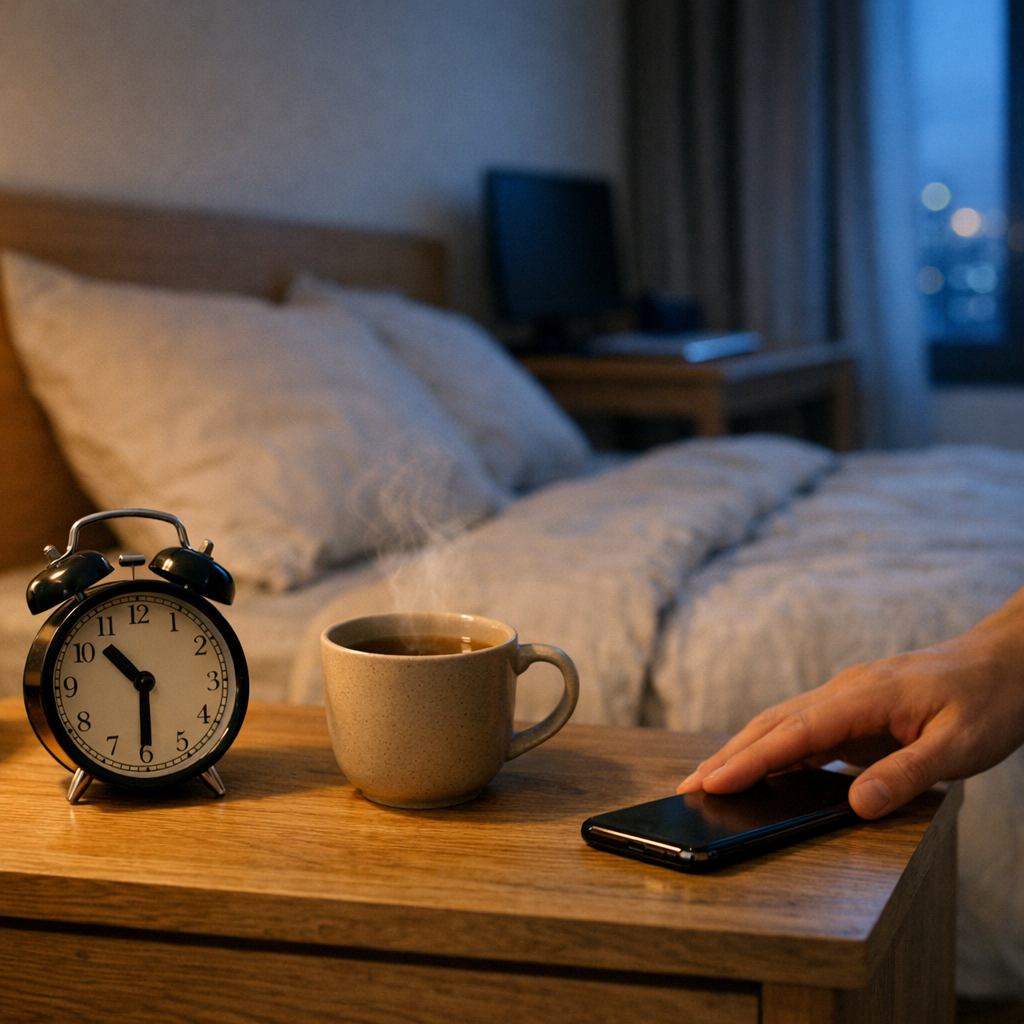
The 10-3-2-1-0 sleep hack is a simple timeline that became popular on social media. This sleep rule indicates when to taper off caffeine, meals, work, and screens, and how to handle your alarm. Below you’ll find a factual explanation for each step and a practical example routine. Use what fits you. This article is informational and not medical advice. The method is also discussed within the context of biohacking; see What is biohacking? for background.
Explanation: what exactly does 10-3-2-1-0 mean
The 10-3-2-1-0 method is often used as a framework for a consistent evening routine. The core comes in five steps:
| Step | Action | Key reason |
|---|---|---|
| 10 | 10 hours before bedtime: no more caffeine | Caffeine can remain in your system for a long time. Stopping earlier helps limit your total intake. |
| 3 | 3 hours before bedtime: no alcohol and no large meals | Eating late or having alcohol close to bedtime can affect your evening routine. Finishing earlier keeps your schedule simple. |
| 2 | 2 hours before bedtime: wrap up work and demanding tasks | Switch to low-effort activities so you’re no longer occupied with to-dos. |
| 1 | 1 hour before bedtime: screens off | Screens provide light and stimulation. Many people choose analog activities such as reading during this hour. |
| 0 | 0 times snoozing | Getting up at the first alarm supports a fixed wake time and a predictable morning. More on morning clarity can be found in our information overview on brain fog. |
The rule was popularized by Jess Andrade and previously described by Craig Ballantyne. It’s a practical guideline, not a guarantee or treatment.
How to apply the 10-3-2-1-0 method in your evening routine
Example with a bedtime of 23:00 and alarm at 07:00:
- 13:00 - Last coffee or other caffeinated drink.
- 20:00 - Finish your last meal and no more alcohol.
- 21:00 - Close work and demanding tasks. Prepare your plan for tomorrow.
- 22:00 - Screens off. Choose analog activities such as reading, journaling, or a warm shower.
- 07:00 - Get up at the first alarm, no snoozing.
Make it manageable: adjust times to your own schedule, test it consistently for a few days, and note what’s practical for you. If you have questions or persistent sleep problems, consider professional advice.
Want an easy start with routines? Read The best biohack for beginners for a low-threshold beginning.
Frequently asked questions
What is the 10 3 2 1 0 sleep rule?
The 10-3-2-1-0 sleep rule is a plan for the hours leading up to bedtime: 10 hours no caffeine, 3 hours no large meals or alcohol, 2 hours no more work, 1 hour no screens, and 0 times snoozing. It’s a structure people use to make their evening predictable.
How can I sleep better with the 3-2-1 method?
If you want to test the 3-2-1 routine, stop food and alcohol about 3 hours before bed, work and tasks 2 hours before bed, and all screens 1 hour before bed. Evaluate after 1 to 2 weeks whether this approach is practical for you. This is not medical advice; seek care-provider advice if needed.
What are 10 tips to fall asleep?
- Keep fixed bed and wake times
- Limit caffeine later in the day
- Make the bedroom cool and dark
- Place your phone out of reach
- Read a paper book
- Take a warm shower beforehand
- Write down your to-dos for tomorrow
- Avoid heavy meals late in the evening
- Ventilate the bedroom
- Limit bright lights later in the evening
Further reading
Want to know more about our formulas and ingredients at Vibefuel? Browse our range.
Share:
Lion’s Mane side effects: risks, interactions and tips
Best supplement for memory: how to choose wisely