

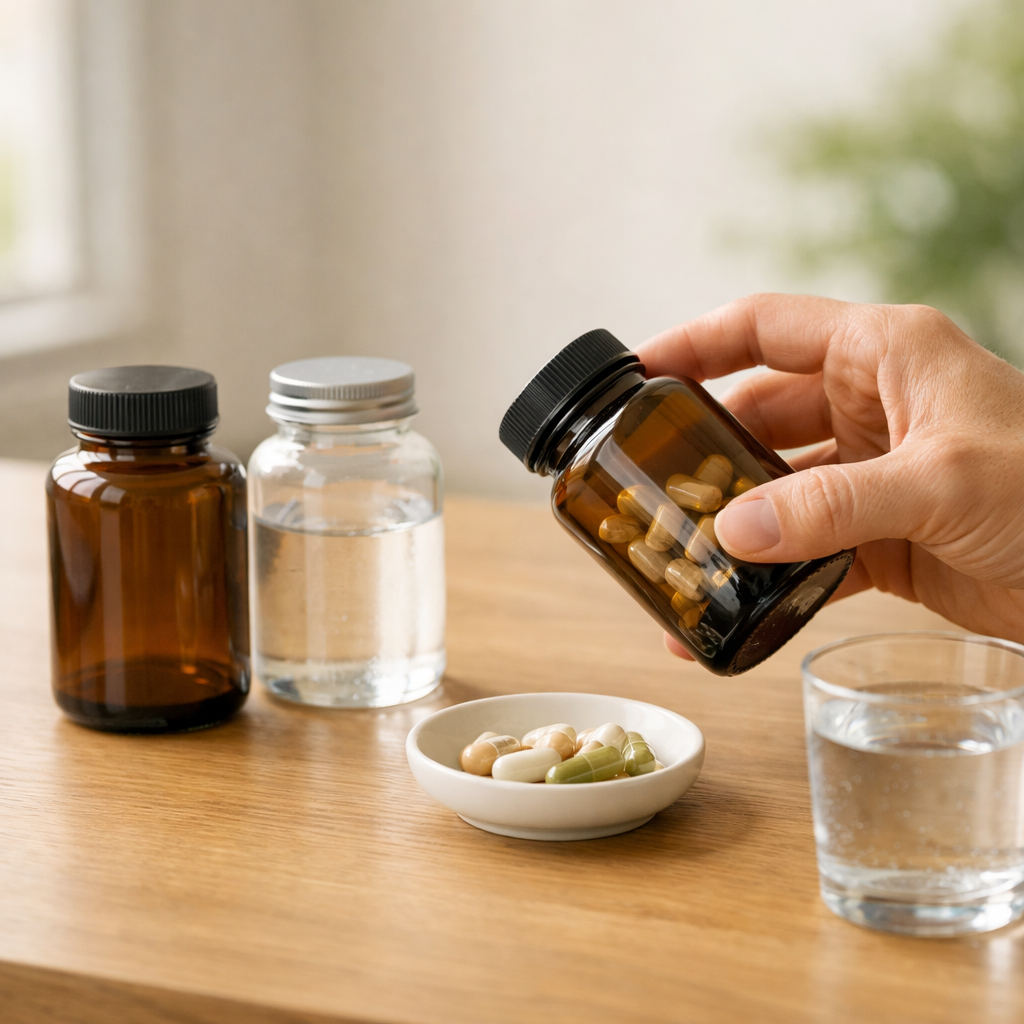
Looking for factual information on supplements for concentration? This guide explains what falls under concentration supplements, which ingredients are common, how to assess labels, and what to consider for safe use. Everything is educational and claim-free, so you can make an informed choice on your own within the range of concentration dietary supplements.
Common ingredients in concentration supplements
You can find a concise summary per ingredient in the overview Ingredient overview (focus).
Omega-3 from fish or algae oil
Omega-3 fatty acids such as DHA and EPA occur naturally in fatty fish and in algae oil as a plant-based alternative. Supplements typically state the DHA/EPA content per daily serving and the source of the oil. Watch for oxidation indicators on the label and choose products with clear information about purity and origin.
B vitamins and magnesium
B vitamins (e.g., B6, B12, folate) and magnesium are often combined in a concentration supplement or a multi formula. Labels show dosages in mg or mcg and sometimes the form, such as methylcobalamin for B12 or magnesium citrate. The form says something about solubility and practical use; the choice is personal and depends on your preference and tolerance.
L-theanine
L-theanine is an amino acid that naturally occurs in tea leaves. In concentration supplements it is often used as a single ingredient, usually in capsules or tablets with a clear amount per serving. The term l theanine concentration appears frequently in searches; always base your choice on transparent composition and product quality.
Ginkgo biloba
Ginkgo biloba is an extract from the leaves of the ginkgo tree. Quality products state standardization, often around 24 percent flavone glycosides and 6 percent terpene lactones. Check the label for the extract ratio used, batch information, and any warnings or restrictions for use. More background: Ginkgo biloba (explainer).
Lion’s Mane and ashwagandha
Lion’s Mane is a mushroom used culinarily and traditionally in Asia; supplements contain powder or extracts with specified components. Want factual background? Lion’s Mane – what is it?. Ashwagandha is a root from the Ayurvedic tradition, often standardized for withanolides. In a broader context, some root and herb extracts are classed as adaptogens; see Adaptogens: what are they? for a neutral overview.
What to look for when choosing a supplement
Assessing a concentration supplement starts with the label. These points help you compare apples to apples:
- Composition and standardization - Are extracts standardized and are active components specified?
- Dosage per daily serving - Do the totals of ingredients per recommended intake add up and are units clear?
- Form and origin - Capsules, tablets or powder, vegan or not, fish oil or algae oil, caffeine-free or with caffeine.
- Purity and excipients - Information on fillers and excipients, any allergens, and quality testing.
- Quality systems - Mentions such as GMP, batch number, and availability of certificates of analysis.
- Regulation and claims - Avoid products with non-permitted claim texts; in the EU, the claim space is strictly regulated.
Safety and use
Always read the label and follow the stated dosage. Not intended for children unless otherwise indicated. Consult your doctor or pharmacist during pregnancy, breastfeeding, or when using medication. For ginkgo biloba, pay extra attention when combined with anticoagulants. Do not combine products without checking the total ingredients, and store supplements cool, dry, and out of reach of children.
Frequently asked questions about supplements for concentration
What is the best supplement for concentration?
There is no universal best choice. Some people look for a single ingredient such as L-theanine, others for a multi-ingredient formula. Consider composition, standardization, origin, dietary preferences such as vegan or caffeine-free, and the transparency of the producer. Preferably start by assessing one product at a time. If you come across the term nootropics and want the basics, read: What are nootropics?
What to take for concentration?
Common categories are amino acids (such as L-theanine), plant extracts (such as ginkgo biloba), fatty acids (such as omega-3), and multi formulas. Choose based on clearly labeled dosages, quality, and regulation. Besides supplements, planning, stimulus management, and a calm workspace can support your daily structure. For a neutral starting point see Information on focus supplements.
Which vitamins are good for concentration?
There is no official list of “concentration vitamins.” On multivitamin labels you will often see B1, B2, B3, B6, B12, folate, vitamin C, and minerals such as magnesium. Read the text on the product for permitted information and compare dosages, forms, and any diet or allergen indications.
This blog is informational and not intended as medical advice.
Share:
Lion's Mane effects: facts, composition and research