

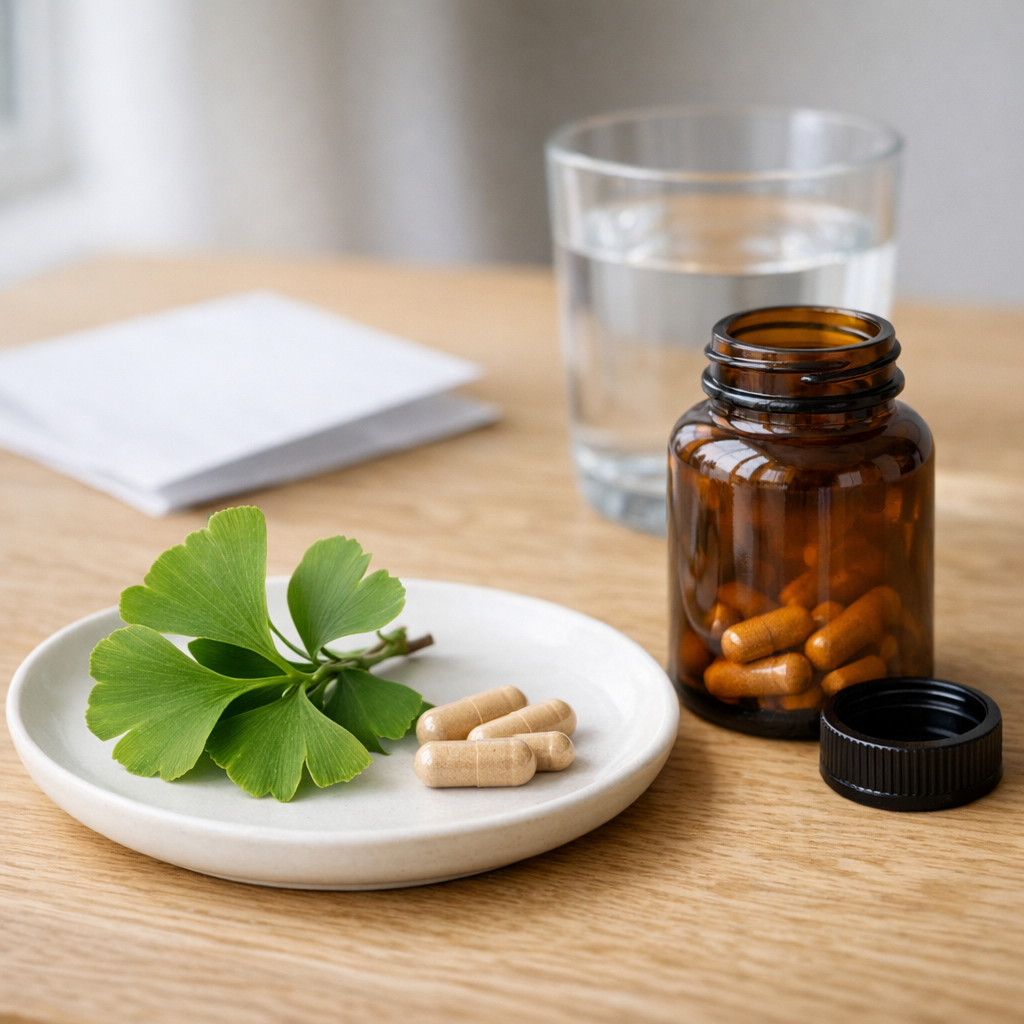
Ginkgo biloba is the botanical name of the Japanese ginkgo tree, an ancient species whose leaves are used for standardized extracts in dietary supplements. This article provides factual, claim-free information on origin, composition, forms of use, EU regulation, safety, and commonly searched combinations, so you can better understand the ingredient and read labels more consciously. For general context, see: What are nootropics?
Origin and plant characteristics
The ginkgo is a so‑called living fossil: a lineage that has existed for millions of years. It originates from East Asia and has been planted worldwide over time. The tree is dioecious and recognizable by fan-shaped leaves that turn strikingly yellow in autumn. Despite the name suggesting “nuts,” they are seeds with a fleshy outer layer. Supplements almost always use the leaf, not the seeds.
Composition of ginkgo extract
Ginkgo extracts are typically rich in flavonol glycosides and terpene lactones, including ginkgolides and bilobalide. Commercial products often feature standardized extracts, for example 24 percent flavonol glycosides and 6 percent terpene lactones. Standardization helps ensure consistent composition between batches. Undesirable substances, such as ginkgolic acids, are usually reduced during quality processes to specifications set by the manufacturer. For more background on this theme: Antioxidants explained.
Forms of use and how to read labels
Ginkgo biloba comes in various dosage forms. When purchasing, check the ingredient’s origin, its standardization, and the total daily dose as indicated on the label.
- Capsules and tablets – usually with standardized leaf extract.
- Liquid extracts – drops with a stated herb‑to‑extract ratio.
- Tea or loose leaf – not standardized and therefore variable in composition.
General market information often mentions daily amounts in the range of 120 to 240 mg of standardized extract, divided over 1 to 2 intakes. Always follow the label of the specific product and consult a doctor or pharmacist if in doubt, especially if you use medication or have medical conditions. For a related overview, see Which supplements are good for concentration?.
Research and regulation in the EU
In the European context, health claims for ginkgo biloba have not been approved by EFSA. This means supplements in the EU may not make effect claims attributed to ginkgo. In the Netherlands there are currently no registered herbal medicines with ginkgo as the active substance. Publications cover different research lines, but results and methods vary, so conclusions are not uniform. When assessing information, consider the standardization of the extract used, dosages, study duration, and whether it concerns a supplement or a nationally registered herbal medicine in another country with a specific registration procedure. For a neutral, additional deep dive on this theme: What is the best supplement for focus?.
Safety, interactions, and who should take extra care
Although ginkgo extracts are widely available, safety warrants attention.
- Interaction with blood clotting – ginkgo may affect blood clotting. Be extra cautious when combined with anticoagulants or antiplatelet agents and around surgeries or dental procedures. Always consult your doctor or pharmacist.
- Combination with medicines – there are reports and case studies of interactions with anticoagulants, certain antidepressants, and NSAIDs, among others. Self‑combining without professional advice is discouraged.
- Side effects – reported side effects include gastrointestinal complaints, headache, dizziness, and skin reactions. Discontinue use if adverse reactions occur and consult a healthcare professional. Report suspected side effects via the appropriate channels in your country.
- Seeds and raw consumption – ginkgo seeds can be toxic when ingested in unprocessed form. Supplements use leaf extract, not seeds.
- Pregnancy, breastfeeding, and medical indications – if pregnant or breastfeeding, with bleeding disorders, epilepsy, or planned surgery, seek medical advice beforehand.
Do not use ginkgo as a replacement for prescribed care. If you use medication or are unsure, personal advice from a doctor or pharmacist is the safest route.
Common combinations and confusions
Search behavior often shows combinations and variants of the name. It is useful to read labels carefully and not stack ingredients without advice.
- Name confusion – terms like ginseng biloba, go biloba, kiko biloba, or ginķo biloba generally refer to ginkgo biloba. Ginseng is a different plant and not the same as ginkgo.
- Combinations in supplements – you may see queries like ginkgo biloba magnesium, ginkgo magnesium, omega 3 ginkgo biloba, 5 htp ginkgo biloba, maca ginkgo, and vitamin b12 ginkgo biloba. Such combinations appear in multi‑ingredient formulas. Always check dosages, potential interactions, and follow the label.
- International search terms – terms such as ginkgo biloba usos y beneficios appear. Within the EU, health claims for ginkgo are not permitted, so we do not communicate about them.
For neutral background on this topic: What is the best supplement for memory?.
Frequently asked questions
What does ginkgo biloba do in the body?
Ginkgo is a standardized plant extract containing flavonol glycosides and terpene lactones. In the EU, there are no approved health claims for ginkgo. Scientific publications explore various aspects, but conclusions are not uniform. Do not use ginkgo as a substitute for medical treatment and consult a doctor if in doubt.
What are the downsides of ginkgo biloba?
As with many herbal supplements, side effects can occur, such as gastrointestinal complaints, headache, dizziness, and skin reactions. Interactions with medicines that affect blood clotting are relevant. Do not take risks around surgeries or when combining with medication; seek advice from your doctor or pharmacist.
What happens if you take ginkgo biloba every day?
Daily use means a regular intake of the amount stated on the label. Pay attention to consistency in standardization and dosage. Because claims are not permitted in the EU and responses may vary, it is wise to evaluate use periodically, stop if complaints arise, and consult a healthcare professional.
Does ginkgo biloba lower blood pressure?
There is no EFSA‑approved claim for blood pressure for ginkgo. If you use blood pressure medication, consult your doctor before considering a ginkgo supplement due to possible interactions and the importance of a stable treatment plan.
To share:
5-HTP supplement explained, dosage and safety
GABA supplement explained: how it works, use and choice