

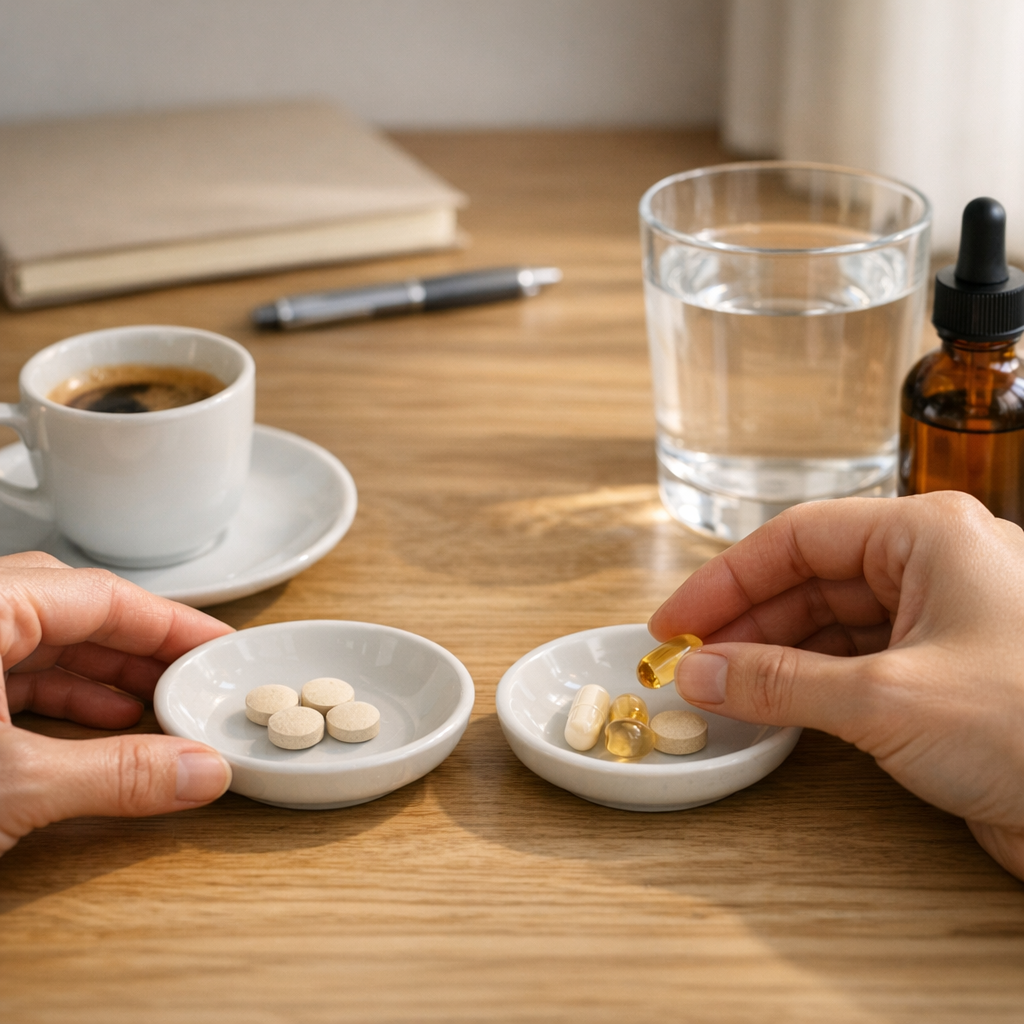
Looking for the best focus supplement? There’s no universal winner. The term “focus” is used for a wide range of products—from caffeine formulas to caffeine-free nootropics with amino acids, minerals, or botanical extracts. This guide offers a neutral, practical way to compare products: what to look for, which ingredients appear often, the difference between caffeine and caffeine-free, and how to proceed safely and systematically.
How do you decide which focus supplement is best for you?
Start with your criteria. Do you want to avoid caffeine, are you sensitive to certain additives, do you follow a vegan diet, or are you looking for a simple once-daily supplement? Write this down first so you can compare more purposefully. Then check the label for transparency: exact doses per ingredient, forms used, and any standardizations. Avoid proprietary blends if dose insight is important to you.
Look at the source of information. Manufacturer websites, labels, and independent monographs provide context. Research on nootropics varies in design and quality; treat individual studies as sources of information, not guarantees. Finally, check practical aspects: capsule size, number of capsules per day, interactions with medications, and whether third-party testing or quality standards (such as HACCP or ISO) are indicated.
Caffeine or caffeine-free?
Products with caffeine are widespread. Beyond the amount of caffeine, look at synergistic ingredients, any added sugars or sweeteners, and your total caffeine intake from foods and drinks. For those who want to avoid caffeine, there are many alternatives without stimulants. This category often relies on amino acids, minerals, B vitamins, phospholipids, or standardized plant and mushroom ingredients.
Make a neutral comparison by matching the label to your personal preference: caffeine—yes or no, a dosing schedule that fits your day, and the degree of transparency about composition. Both routes—with or without caffeine—are common; the “best” is context-dependent.
Key ingredients explained briefly
The list below provides a neutral overview of commonly mentioned ingredients in focus-oriented formulas. Descriptions and origins are informational and not health claims. Doses in research vary; always consult the label and professional advice. See also Ingredients for focus: overview.
- Magnesium - Essential mineral; different forms like bisglycinate, taurate, and citrate. Absorption and tolerance can differ by form.
- B vitamins - Water-soluble vitamins from food and supplements. Often included as complete B-complexes or as individual forms such as B12 or folate.
- Omega-3 (EPA/DHA) - Polyunsaturated fatty acids from fish or algae oil. Typically dosed in the hundreds of milligrams per day.
- L-theanine - Amino acid from tea leaves. Frequently studied together with caffeine in various research designs.
- Citicoline (CDP-choline) - Choline source; known as the branded raw material Cognizin in some formulas. Labels commonly list 100–500 mg per serving.
- Tyrosine - Amino acid. In studies often used in demanding task contexts; doses vary by protocol.
- Creatine - Organic compound known from sports supplementation. Sometimes used in studies with cognitive parameters; typically 3–5 g per day in powder form.
- Ginkgo biloba - Leaf extract; often standardized (e.g., 24-6 specifications). Claims in the EU are limited or under review.
- Bacopa monnieri - Herb from traditional Ayurveda; standardized extracts with bacosides appear in nootropic formulations.
- Lion’s Mane - Mushroom preparation from fruiting body or mycelium. In the EU there are no approved health claims for this ingredient.
- GABA - Endogenous compound; also available as a supplement. Labels show a wide range of dose levels.
- Griffonia (5-HTP) - Plant source of 5-HTP. Note potential interactions with serotonergic medication—medical advice is recommended.
Quality and label check: what to look for?
A systematic label check helps prevent disappointment. Verify that each ingredient lists milligrams and form, whether standardized extracts are used, and whether the origin of raw materials is stated. Look for information on lab testing for contaminants and clear allergen labeling.
Practical points often overlooked: type of capsule or tablet, excipients, vegan or gluten-free status, and the number of servings per package. Transparency about batch numbers, production date, and shelf life adds confidence. None of this speaks to personal suitability, but it does indicate professionalism and verifiability.
Combinations often studied or used
Some combinations appear regularly in studies or practice notes. The examples below are informational and claim-free.
- Caffeine + L-theanine - A widely described duo in research. Watch total caffeine intake from all sources.
- Citicoline + phospholipids or DHA - Formulations sometimes pair choline sources with fatty acids or phospholipids. Labels often show 100–300 mg citicoline per serving.
- Multivitamin + omega-3 - A multi is often used together with EPA/DHA. The practical reason is usually covering multiple nutrients per day.
- Caffeine-free stack - Combinations without stimulants, for example amino acids, minerals, and botanicals in one formula. Labels reveal the per-serving composition.
Keep combinations simple when you start: one change at a time makes it easier to evaluate whether a formula fits you in practice.
Safety, timing, and use
Always read the label and follow the manufacturer’s directions. Start with the lowest recommended amount and evaluate after a fixed period. Don’t start multiple new products at once—this makes it easier to attribute your experience to a single change. Be careful with products around intense training, late in the evening, or alongside multiple caffeine sources.
Specific points of attention: consult a doctor during pregnancy, breastfeeding, when using medications, or with existing conditions. For ingredients like 5-HTP, ginkgo, and certain adaptogens, interactions are possible—professional advice is sensible in those cases. Store supplements cool, dry, and out of reach of children.
Frequently asked questions about focus supplements
Which supplement is best for concentration?
There is no universal “best” supplement. The most suitable option depends on your preference for caffeine or caffeine-free, your diet, label transparency, and practical factors like dosing convenience and capsule size. Use the label check and choose step by step. Read also: Explanation: supplements and concentration.
Which supplement for focus without caffeine?
Caffeine-free formulas often use combinations of amino acids, minerals, B vitamins, phospholipids, and botanicals or mushroom preparations. Compare products on exact doses, forms used, and any standardizations. Start simple and evaluate after a set period.
What helps improve focus besides supplements?
Many people also look at basics like daily structure, consistent bedtimes, environmental stimuli, breaks, hydration, and planning techniques. These are general organizational and lifestyle factors; combine them with careful product selection and a realistic evaluation period.
What are the best nootropics?
“Best” depends on your selection criteria. Common in nootropics: L-theanine, choline sources such as citicoline, omega-3, B vitamins, and minerals like magnesium, alongside various botanicals. Assess transparency, quality, and practical applicability for each product.
Further reading
Want to compare different types of formulas and compositions side by side? Visit Focus supplement: information for a neutral orientation.
Share:
What is Lion's Mane? Origin and uses | VIBEFUEL
Lion's Mane dosage: how much per day? | VIBEFUEL