

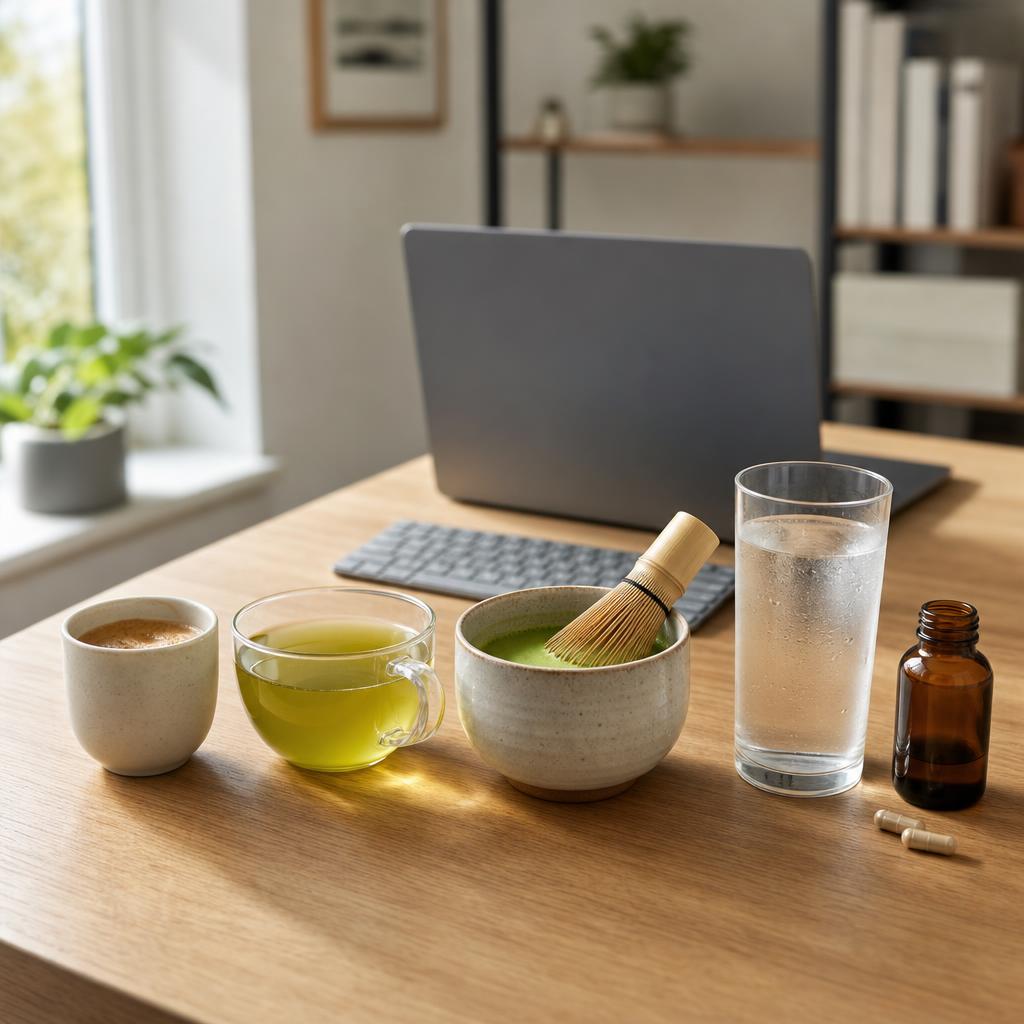
Anyone searching for the best drink for memory and concentration usually wants to know quickly which options are available, what exactly they contain, and which choice makes the most sense for work, study, or long days in front of a screen. The short answer: there is no single universally best drink. The most commonly chosen options are coffee, green tea, matcha, water, and sugar-free drinks with a simple composition. Which drink suits you best mainly depends on caffeine sensitivity, taste, timing, and how much sugar you consume.
On this page, you will read which drinks are often mentioned for concentration, what to look for on the label, and which choice is practical if you want to stay clear-headed without unnecessary additives. We also explain why hydration, caffeine, and sugar come up so often within this search intent.
What people usually mean by a drink for concentration
The search question "which drink helps with concentration?" is usually not just about taste, but about moments of use. Think of starting the morning, an afternoon slump, exam week, or a long workday. In practice, these categories are looked at most often:
- coffee
- green tea
- matcha
- water
- sugar-free energy drink or functional drink
- drinks with a lot of sugar or no sugar at all
Three questions keep coming back: how much caffeine does it contain, how much sugar does the product have, and how easy is it to fit into your daily routine. For many people, that matters more than marketing terms on the packaging.
The most chosen drinks for memory and concentration
Coffee
For many people, coffee is the first choice when it comes to alertness during work or study. The drink is accessible, available everywhere, and easy to dose through espresso, filter coffee, or a lungo. However, the amount of caffeine varies greatly depending on preparation, bean, and serving size. As a result, coffee feels pleasant and predictable for one person, while someone else finds it too strong.
If you use coffee, it is best to pay attention to timing and quantity. Drinking coffee late in the day does not suit everyone, and a lot of added sugar or syrup can quickly make an apparently simple choice less interesting. Black coffee or coffee with a small, neutral addition is therefore often the most practical option within this search intent. If you want to go deeper into that, you can also read: Is coffee good for your brain?.
Green tea
Green tea is often chosen by people looking for a milder alternative to coffee. The taste is lighter, caffeine intake is often lower per cup, and for many people the drinking moment feels calmer than a quick espresso. That makes green tea popular with people who do want a hot drink, but something less intense than coffee.
There are big differences between loose tea, tea bags, and strongly or lightly brewed versions. So do not only look at the type of tea, but also at how you prepare it. In practice, people searching for a drink for concentration often choose unsweetened green tea because the composition stays easy to understand.
Matcha
In a short time, matcha has become a well-known option alongside coffee and tea. It is a finely ground green tea that is often prepared with water or milk. Because matcha can feel more concentrated than regular green tea, some people choose it as an alternative to coffee or energy drinks. At the same time, a lot here also depends on portion size, recipe, and additions.
Ready-made matcha lattes especially can differ considerably in sugar content. If you want to make a conscious choice, do not only look at the word matcha on the front, but especially at the nutrition table and ingredient list. A simple preparation with few extras usually fits this search better than sweet coffee bar drinks.
Water
Water may sound less exciting than coffee or tea, but it is mentioned surprisingly often when people ask what is good for your memory and concentration. That is mainly because not drinking enough during a work or study day can be noticeable right away in how fit and fresh someone feels. Water is also calorie-free, inexpensive, and easy to use throughout the day.
Water is not a replacement for every other drink, but it is a logical foundation. Especially if you use coffee, tea, or another caffeinated drink, adequate fluid intake remains a practical factor. For many people, a combination of water as a base and one deliberate choice with caffeine is the clearest approach.
Sugar-free functional drinks or energy drinks
Sugar-free functional drinks are also often considered within this topic. People usually choose this category because of convenience, flavor variety, and a clear label showing caffeine content per can or serving. At the same time, this is the category where marketing often speaks louder than the actual composition.
If you are considering such a drink, look at the basics objectively: how much caffeine does it contain, how many sweeteners or other additives are used, and is the serving realistic for your moment of the day? A sugar-free option can be more practical than a version with a lot of sugar, but not every product is automatically a smart choice just because it says "zero" or "smart" on the packaging.
So what is really the best drink?
If you look at it purely practically, three choices most often come forward as the most logical:
- water as a base throughout the day
- coffee if you want a clear and familiar caffeine choice
- green tea or matcha if you prefer a milder alternative
The best drink for memory and concentration is therefore usually not the most special one, but the drink that fits your tolerance, timing, and daily habits. For one person that is a cup of coffee in the morning, for another it is a simple unsweetened green tea and enough water spread throughout the day. For broader educational context, you can also read: Explanation: focus and memory.
What to look for when choosing a drink
Caffeine content
Caffeine content determines for many people whether a drink feels pleasant in practice. A small coffee, large filter coffee, strong matcha, or an energy drink can all work out differently. So do not only look at the type of drink, but also at the serving size. Especially if you are sensitive to caffeine, that is often more important than the product's image.
Sugar and calories
Many drinks marketed as smart or functional actually contain a lot of sugar. Think of iced tea, coffee bar drinks, energy blends, and ready-made matcha lattes. If you want to choose consciously, always compare the sugar content per 100 ml and per serving. A drink that goes down quickly can contain a lot of sugar without you noticing.
Time of day
The same drink may fit perfectly in the morning and be less convenient later in the day. That is why timing is an important part of the choice. A product that works well early in the day is not automatically the best option in the afternoon or evening.
Simple composition
When in doubt, a short, understandable ingredient list is often the clearest option. Water, coffee, and tea have an advantage here. For ready-made drinks, the rule is: the more additives, the more important it becomes to read the label carefully.
Quick comparison of popular choices
| Drink | Why it is often chosen | What to look for |
|---|---|---|
| Water | Simple, calorie-free, usable all day | Mainly drinking enough spread out over the day |
| Coffee | Familiar choice, clear taste and routine | Serving size, caffeine, sugar in extras |
| Green tea | Milder alternative to coffee | Strength of the tea, additives |
| Matcha | Popular variant within tea | Sugar in lattes and ready-made versions |
| Sugar-free energy drink | Convenient and ready to use immediately | Caffeine per can, sweeteners, timing |
What is better to limit?
Not every drink fits logically within the search intent best drink for memory and concentration. These choices especially deserve extra attention:
- drinks with a lot of added sugar
- large coffee bar drinks with syrups and toppings
- multiple caffeinated drinks in a short period
- drinks whose composition is hard to find
If you want clarity quickly, a simple choice is usually more useful than a product with a long marketing text and an unclear label.
What is good for your memory and concentration besides drinking?
This search question often appears together with broader questions such as "what is good for your memory and concentration?" or "what is the best supplement for memory?" In that case, it is useful to distinguish between drinks, nutrition, and supplements. A drink is first and foremost a moment of use in your day. Supplements are a separate product category with a different role, different composition, and different regulations.
Because Vibefuel mainly offers supplements within this topic and not a specific drink, it is good to keep that distinction clear. If you are really looking for a drink, you mainly compare coffee, tea, water, and other ready-made options based on composition. If you are looking for information about ingredients, a separate ingredient or supplement page makes more sense. If you want to read more broadly about nutrition, you can do so separately from this article.
Practical guide: which drink suits you?
- Do you want to keep it simple and calorie-free? Start with water.
- Looking for a classic morning drink? Coffee is the most obvious choice.
- Would you prefer something milder than coffee? Look at green tea.
- Do you care about taste and ritual? Then matcha may be interesting.
- Do you want convenience on the go? Compare sugar-free ready-made options mainly by label and serving size.
FAQ about the best drink for memory and concentration
Which drink helps with concentration?
The most commonly chosen drinks in this context are coffee, green tea, matcha, and water. Which option feels best for you depends on taste, caffeine sensitivity, timing, and how much sugar you want to avoid.
What is good for your memory and concentration?
With this question, people often look at a combination of drinking enough, a practical daily routine, and conscious choices in coffee, tea, or other drinks. Within drinks, simplicity, sugar content, and caffeine content are usually the most important comparison points.
Is coffee better than tea for concentration?
That differs from person to person. Coffee is often stronger and more direct in use, while tea is popular among people who want a milder choice. If you want to compare those differences further, you can also read about Caffeine vs L-theanine: comparison for focus.
Is water also important if you care about concentration?
Yes, water remains the most logical basic drink throughout the day. Even if you drink coffee or tea, adequate fluid intake remains a practical factor in your daily routine.
Are sugar-free energy drinks a good choice?
They can be practical because of ease of use and a clear label, but always compare the caffeine per serving and the rest of the ingredients. Sugar-free does not automatically mean that every product fits your situation equally well.
What should you take for forgetfulness?
That is a different question from which drink you choose. Taking something usually refers to supplements or other products. Because rules around ingredients and claims are strict, it is sensible to look at supplement information separately from an article about drinks.
What is the best supplement for memory?
There is no single standard answer to that within an article about drinks. It is better to review the composition, origin, and permitted information per ingredient or product on a separate informational page. For a broader and neutral context, you may want to read more about concentration in a separate explanation article.
Read more about ingredients and supplements
Want to keep reading after this article about ingredients? Then view an overview page or read more about specific terms. Start here, for example: What are nootropics?
Share:
Focus supplements for ADHD: what should you look for?
Alternatives to coffee for focus: 7 smart choices