

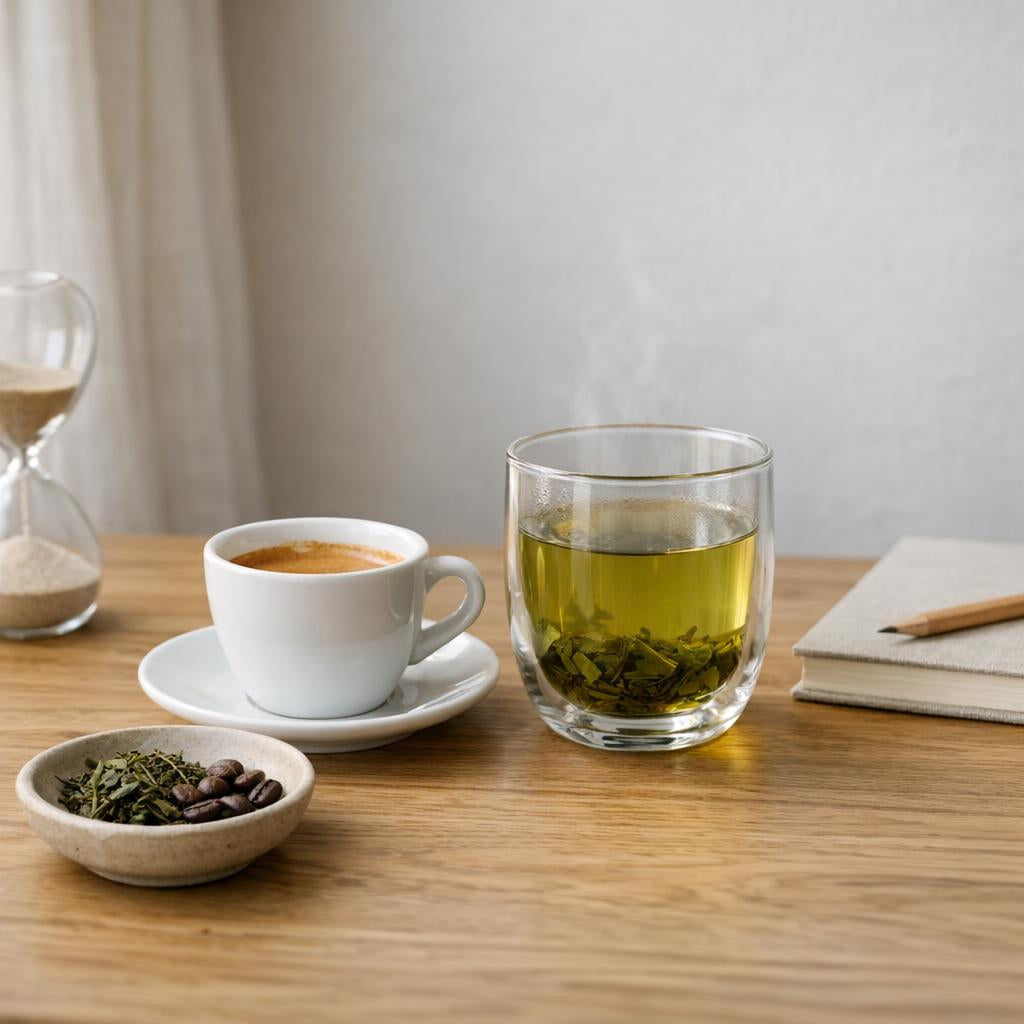
Looking for factual information about caffeine and L-theanine for focus? This article organizes origin, dietary sources, commonly used study designs, and considerations around safety and timing. Goal: to clarify the topic without recommendations or health claims. For a basic explainer on nootropics: What are nootropics?
What are caffeine and L-theanine?
Caffeine is a naturally occurring, bitter-tasting compound found in coffee beans, tea leaves, cocoa beans, and some nuts and seeds. In nutrition research, caffeine is often described as being rapidly absorbed and widely distributed throughout the body. See also Coffee and the brain: explainer.
L-theanine is an amino acid analogue naturally present in tea leaves, especially green tea. In the scientific literature, L-theanine is frequently discussed in the context of brain and nutrition research, with attention to intake via tea and supplemental forms derived from tea.
Why are they often mentioned together?
Caffeine and L-theanine naturally co-occur in tea. For decades, nutrition and neuropsychology studies have examined this combination. Publications vary in design, but many approximate a ratio in which the amount of L-theanine is similar to the amount of caffeine in the test condition.
Researchers frequently describe standardized amounts per intake in their methods sections and compare them with reference sources such as coffee or tea. Not all studies use the same doses or timelines, and outcomes differ by population, task type, and measurement tools. It is therefore common for authors to frame results within the limits of their setup, such as sample size, habitual caffeine use, or time of day of intake.
In short: they are often mentioned together because they co-occur in tea and because there is scientific interest in studying both together. This says nothing about personal suitability or preference—it mainly indicates that comparative research is being conducted. For a research-oriented starting point: Nootropics for focus and productivity: what research says.
Sources and amounts in foods
The values below are common approximations in food sources. Actual values can vary by brand, brewing method, and serving size.
| Source | Typical serving | Average caffeine | Average L-theanine |
|---|---|---|---|
| Filter coffee | 200 ml | approx. 80–120 mg | n/a |
| Espresso | 30 ml | approx. 60–90 mg | n/a |
| Green tea | 200 ml | approx. 20–45 mg | approx. 8–20 mg |
Prefer neutral navigation to related ingredients? See the Ingredients overview: focus.
Use and timing in research and practice
In scientific protocols, intake is often scheduled so that measurements take place 30–60 minutes after consumption. This aligns with general pharmacokinetic descriptions of caffeine in nutrition research. L-theanine is frequently tested in the same time windows, sometimes as a single compound and sometimes combined with caffeine.
Reported dosages in publications vary widely. Some authors choose fixed amounts per capsule or drink; others scale by body weight. Such methods do not describe a personal recommendation—they simply document how a measurement was conducted. If you want to orient yourself on this topic, consult the methods sections of studies and note factors such as total daily caffeine intake, habituation, and the control groups used.
Safety and regulatory considerations
In the EU, there are rules for labeling and safety warnings on caffeine-containing products. Common guidelines state that caffeine is not suitable for children and that caution is advised during pregnancy and breastfeeding. Sensitive individuals may respond irritably to caffeine even at lower intakes. Stacking multiple caffeine-containing sources in a day can quickly raise total intake.
Always read the label of the product in question and pay attention to any warnings or usage advice. This article is for information only and does not replace professional advice. If in doubt or with existing conditions, consult a physician or pharmacist and consider your overall diet in the decision.
Frequently asked questions
What is the effect of L-theanine on caffeine?
The combination is regularly examined in the scientific literature. Studies often compare test conditions of caffeine alone, L-theanine alone, and both together, then report outcomes on a range of parameters. Results and interpretations differ by study design and population.
Is caffeine good for concentration?
There is extensive research on caffeine in relation to attention tasks. At the same time, dose, habituation, sleep, timing, and individual sensitivity play a major role in measurements. It is therefore not possible to give a general value judgment at an individual level within an informational context. For a broader overview: Which supplements are good for concentration?.
What time should you take theanine?
In studies, intake is often aligned with the measurement time—e.g., 30–60 minutes beforehand. Preferences differ in daily routines. In any case, watch your total caffeine intake when combining tea, coffee, or products containing these ingredients.
What is the best supplement for concentration?
“Best” depends on personal preferences, caffeine sensitivity, dietary choices, and regulatory compliance. Some people prefer caffeine-free options, others choose products with caffeine. Carefully reading labels and consulting neutral sources is a logical starting point. For further orientation: Focus supplement info.
Do you prefer caffeine-free nootropic routines? Then look into stimulant-free formulas and check the provider’s homepage for the range.
Share:
When should you take Lion's Mane? Timing and dosage
Superfoods for your brain: facts, list and tips