

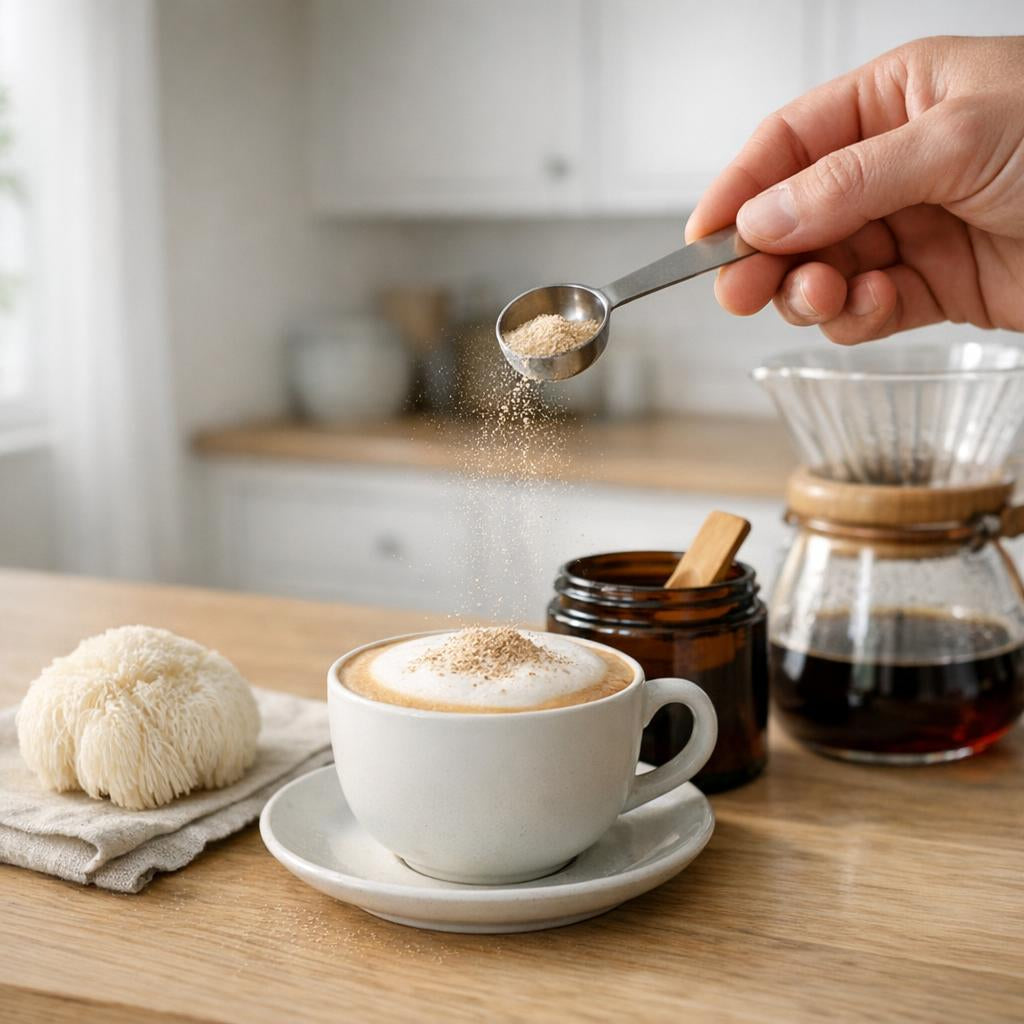
Lion's Mane, also known as lion's mane mushroom, is showing up more and more in coffee culture. In this article, you can read what Lion's Mane is, how people combine it with coffee, what to look for in terms of quality, and which practical choices exist around taste, caffeine, and preparation.
What is Lion's Mane and why add it to coffee?
Lion's Mane (Hericium erinaceus) is an edible mushroom that has long been used in cooking, especially in Asia. In modern applications, Lion's Mane is often processed into a powder or extract, making it easy to mix into hot drinks such as coffee. For people who want an efficient morning routine, the combination of Lion's Mane and coffee can be practical: you add a measurable amount of powder to your existing cup of coffee or choose a ready-made mushroom coffee blend. Note that there are no authorized health claims for Lion's Mane in the EU; the choice is therefore mainly driven by taste and usability.
Ways to add Lion's Mane to coffee
- Dissolve loose powder or extract into espresso or filter coffee. Start with the amount listed on the label. More about dosage (how much and how often).
- Choose an instant mushroom coffee mix for convenience while traveling or at the office.
- Make a latte with plant-based milk and add Lion's Mane for a smooth taste.
- Use spices such as cinnamon or cardamom to balance the flavor.
Taste, caffeine and preparation tips
Lion's Mane has a mild, slightly nutty taste that usually does not overpower the coffee flavor. Your caffeine intake is determined by the coffee, not by the mushroom. See also Is coffee good for your brain? If you are sensitive to caffeine, choose decaf coffee or avoid drinking it later in the day. Stir the powder first with a small layer of warm water for better solubility and fewer lumps. Experiment with the ratio to find your preferred flavor profile.
Quality and origin of Lion's Mane products
When buying, look for clear product information: does the brand use the fruiting body, mycelium, or a combination of both, and which extraction method was used? A dual extract (water and alcohol) is common in mushroom products. Check whether there is information about origin, possible organic certification, and independent lab tests for purity and contaminants. Transparency about batch details and certificates of analysis is a plus.
Frequently asked questions
Is Lion's Mane a good combination with coffee?
That is mainly a matter of taste and routine. Some people choose Lion's Mane coffee for convenience or flavor variation. There are no approved health claims for Lion's Mane in the EU, so base your choice on preference and practical considerations.
What are the negative effects of Lion's Mane?
There is limited research available. Tolerance can differ from person to person. In general, mushroom products may cause digestive discomfort or allergic reactions in some people. Consult your doctor if you are pregnant, breastfeeding, or taking medication. Also keep the caffeine from coffee in mind. More background: Side effects of Lion's Mane: overview. Also read what to avoid when using Lion's Mane.
What time should you take Lion's Mane?
There is no fixed guideline. Many people choose morning or early afternoon. Timing is mainly influenced by your coffee habits and caffeine sensitivity. Follow the instructions on the product label. More about timing: use it in the morning or evening.
Read more or explore further
VIBEFUEL offers supplements with Lion's Mane, but no specific Lion's Mane coffee products. If you want to explore our range without health claims or promises, view our assortment on vibefuel.com.
Share:
Superfoods for your brain: facts, list and tips
4R gut repair model explained: steps and key points