

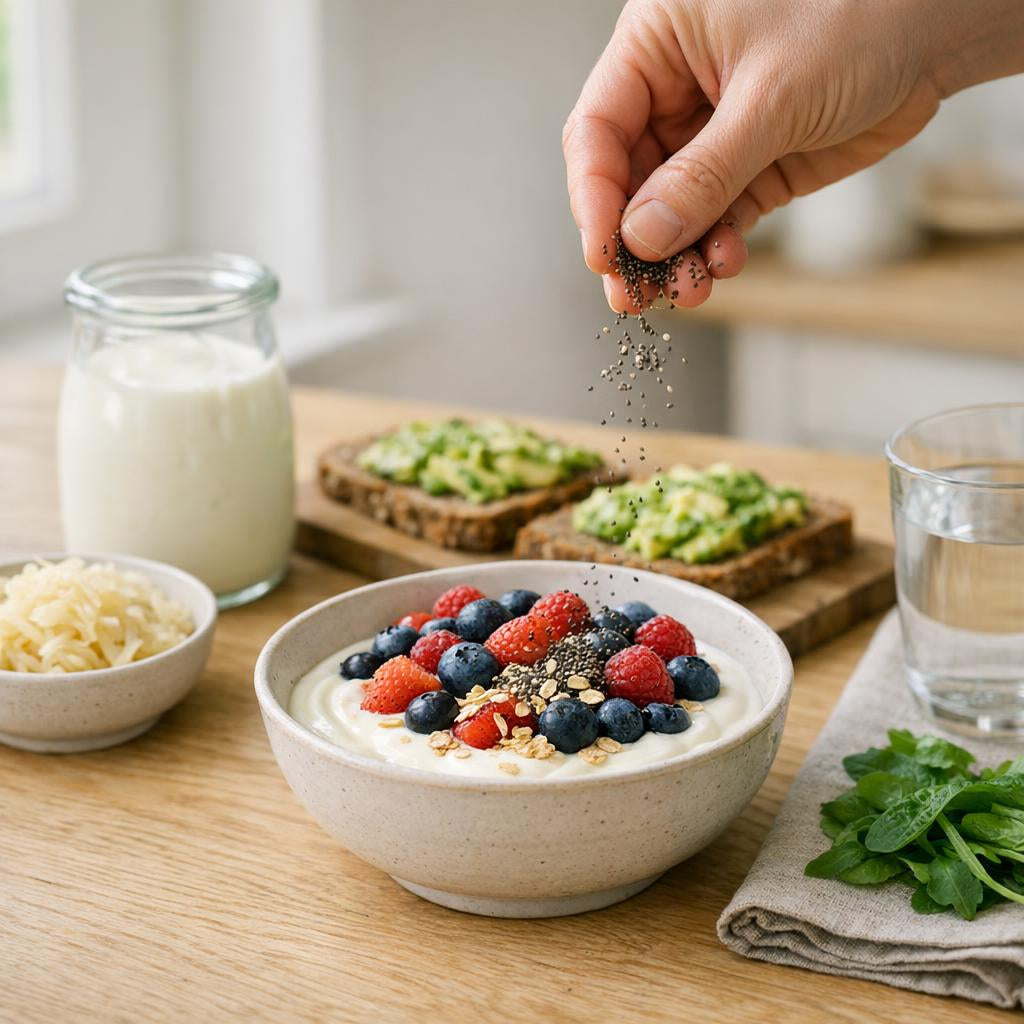
Your gut plays a central role in processing food, making nutrients absorbable, and communicating with other systems in your body. If you want to improve your gut health, it is best to look at a combination of nutrition, daily routines, and lifestyle. In this guide, you will get clear frameworks around digestion and the microbiome, recognizable signs of an imbalanced system, and practical choices around fiber, fermented foods, blood sugar regulation, and rest and rhythm. This way, you can refine your daily patterns with a better understanding. Want to explore this topic more broadly? See Gut health: articles and guides.
Your digestion and microbiome at a glance
Your digestion in brief
Digestion starts in the mouth, where chewing and salivary enzymes begin breaking down carbohydrates. In the stomach, acids and enzymes mix food into a semi-liquid mass. Then the small intestine takes over: pancreatic enzymes and bile from the gallbladder help further break down fats, carbohydrates, and proteins. The wall of the small intestine then absorbs water-soluble substances, fatty acids, and amino acids. What is not absorbed moves on to the large intestine. There, the body extracts water and salts, and gut bacteria ferment dietary fiber. This process produces, among other things, short-chain fatty acids that are used locally in the gut. A smooth and efficient process requires enough fluids, enough fiber, and regularity in meals and movement. Every link in this chain contributes to how your food is ultimately processed and used.
What is the microbiome?
The microbiome is the collection of micro-organisms in your gut. It consists of many species of bacteria and other microbes that together form a dynamic community. Its composition and diversity differ from person to person and change due to diet, sleep, exercise, stress, and medication. A varied diet with fiber and periodic intake of fermented foods can influence variation in the microbiome. The microbiome communicates through local and system-wide pathways with other body functions. Because this community shifts with your lifestyle, consistency in daily choices can help give your gut environment a stable direction.
Signs of an imbalanced gut flora
Common signs of a disrupted balance include bloating, excessive gas, irregular or changing bowel movements, cramps, and abdominal pain. Symptoms outside the abdomen may also play a role, such as unsettled skin, rapidly changing energy levels, altered appetite, or reacting sensitively to certain foods. A single reaction does not tell the whole story; what matters is the pattern over days and weeks. If symptoms become severe, very specific, or persistent, contact your doctor. Use these signs as feedback: adjust one or two habits, track how you respond, and give your body time to adapt to new patterns.
Nutrition for gut health
Fiber and prebiotics
Fiber is indigestible carbohydrate from plant foods. Soluble fiber forms a gel-like mass and is fermented in the large intestine; insoluble fiber adds bulk to stool. Prebiotics are specific fibers that are selectively used by certain bacteria. In practice, whole grains, legumes, vegetables, fruit, nuts, and seeds already take you a long way. Build up the amount gradually and drink enough water. By alternating multiple sources within a week, you increase the variety of fiber types you consume, which is beneficial for diversity in your microbiome. As a framework for food-related choices, you can also consult this reference article: Antioxidants: what are they?.
Fermented foods and probiotics
Fermentation is a process in which micro-organisms break down sugars and transform food. Classic examples are yogurt, kefir, sauerkraut, kimchi, miso, and tempeh. By occasionally adding a small portion of fermented food to your meals, you introduce fermented components into your eating pattern. Start with modest amounts and observe how you respond. Probiotic supplements contain live bacterial strains in a capsule or powder. Products vary greatly in composition and dosage. Consider professional advice if you have a specific choice or dosing question, and at the same time keep paying attention to fiber-rich foods, because bacteria also need nourishment.
Stable blood sugar levels
A steady supply of energy helps your digestion with calm and regularity. Combine carbohydrate sources with proteins and fats, for example bread with legume spread or rice with beans and avocado. Where possible, choose whole-food and minimally processed options. Avoid going long periods without meals if you are sensitive to that. Also be mindful of caffeine, alcohol, and a lot of added sugar in a short period, as these can amplify peaks and dips in your eating rhythm. Want to explore the basics of nutrients as context for your meal choices? See Nutrients: explanations and guides.
White products and highly processed choices
White flour products and foods with a lot of added sugar provide less fiber and variety than whole-grain alternatives. By more often choosing whole-grain bread, brown rice, whole-wheat pasta, and intact grains, you increase your daily intake of fiber and micronutrients. Dairy and gluten are tolerated differently by different people. If you think you may be sensitive, work with a temporary, structured reduction under guidance and then reintroduce them step by step to learn your own tolerance. The general principle remains: the less processed and the richer in fiber, the more predictable your daily gut routine tends to be.
Practical daily menu idea
Have a breakfast of warm oatmeal made with water or your milk of choice, and add grated apple, cinnamon, and a tablespoon of ground flaxseed. For lunch, choose a whole-grain wrap with hummus, plenty of raw vegetables, and optionally tempeh or cooked legumes. In the afternoon, have a piece of fruit or a small serving of yogurt or a plant-based alternative. For dinner, eat a bean and vegetable stew with brown rice, and add a few bites of sauerkraut or kimchi at the table for flavor. Drink water and herbal tea throughout the day. Build up portions and fiber intake gradually and pay attention to how you respond.
Lifestyle: rest, rhythm, and movement
Stress and the gut-brain axis
Your nervous system switches between action mode and rest mode. A lot of stress or constant rushing can disrupt your digestive rhythm. Eat while seated, exhale calmly a few times before you begin, and chew attentively. Short breaks, fresh air, and calm moments around meals are simple ways to bring more calm into your digestion.
Sleep, daily rhythm, and movement
A consistent sleep rhythm supports your eating and bowel patterns. Get up at fixed times, get morning light, and plan meals at similar times. Daily movement such as walking stimulates intestinal peristalsis. Alternate sitting with standing and short walks, and add light to moderate strength or endurance training 2 to 3 times a week, adjusted to your level.
Medication and hormones - points of attention
Antibiotics
Antibiotics are sometimes necessary and are prescribed by a doctor. At the same time, they can also affect the bacterial composition in your gut. Always follow your doctor's advice. After a course, you can return to basic principles such as fiber-rich, varied nutrition and the gradual reintroduction of fermented foods, while giving your system time to stabilize.
Hormonal contraception
Hormonal contraception may in some people be associated with changes in bowel movements and digestive comfort. Keep a simple food and symptom log to recognize patterns. Always discuss questions about side effects or alternatives with your doctor. Regardless of your contraception choice, nutrition, sleep, exercise, and stress reduction remain the daily levers you can use.
Frequently asked questions
How can I get my gut healthy again?
Focus on basic principles you can maintain every day: eat a varied, fiber-rich diet, regularly include small portions of fermented foods, drink enough water, keep fixed eating times, chew mindfully, move daily, and get enough sleep. After a few weeks, calmly evaluate what works for you.
How can I heal my gut naturally?
Avoid the idea of quick fixes. Focus on routines that support the gut environment: minimally processed, fiber-rich foods, calm around meals, stress management, and regularity in sleep and movement. If symptoms are persistent or severe, medical guidance is appropriate.
What are the symptoms of poor gut flora?
Typical signs are bloating, excessive gas, cramps, irregular bowel movements, sensitivity to certain foods, and sometimes changes in skin or energy. What matters is the overall picture over time. Consult a doctor if symptoms persist or worsen.
How can I improve my gut health?
Start with manageable steps: add extra vegetables or legumes every day, choose whole grain over white products, plan three main meals with attention, take short breathing pauses, go outside every day, and keep a simple log to see your personal responses.


To share:
Improve lung function
What is biohacking? Definition, measurement and methods